Feature Engineering
Feature Engineering
less than a minute
Feature Engineering
Use domain knowledge 📕 to create new or transform existing features to improve model performance.
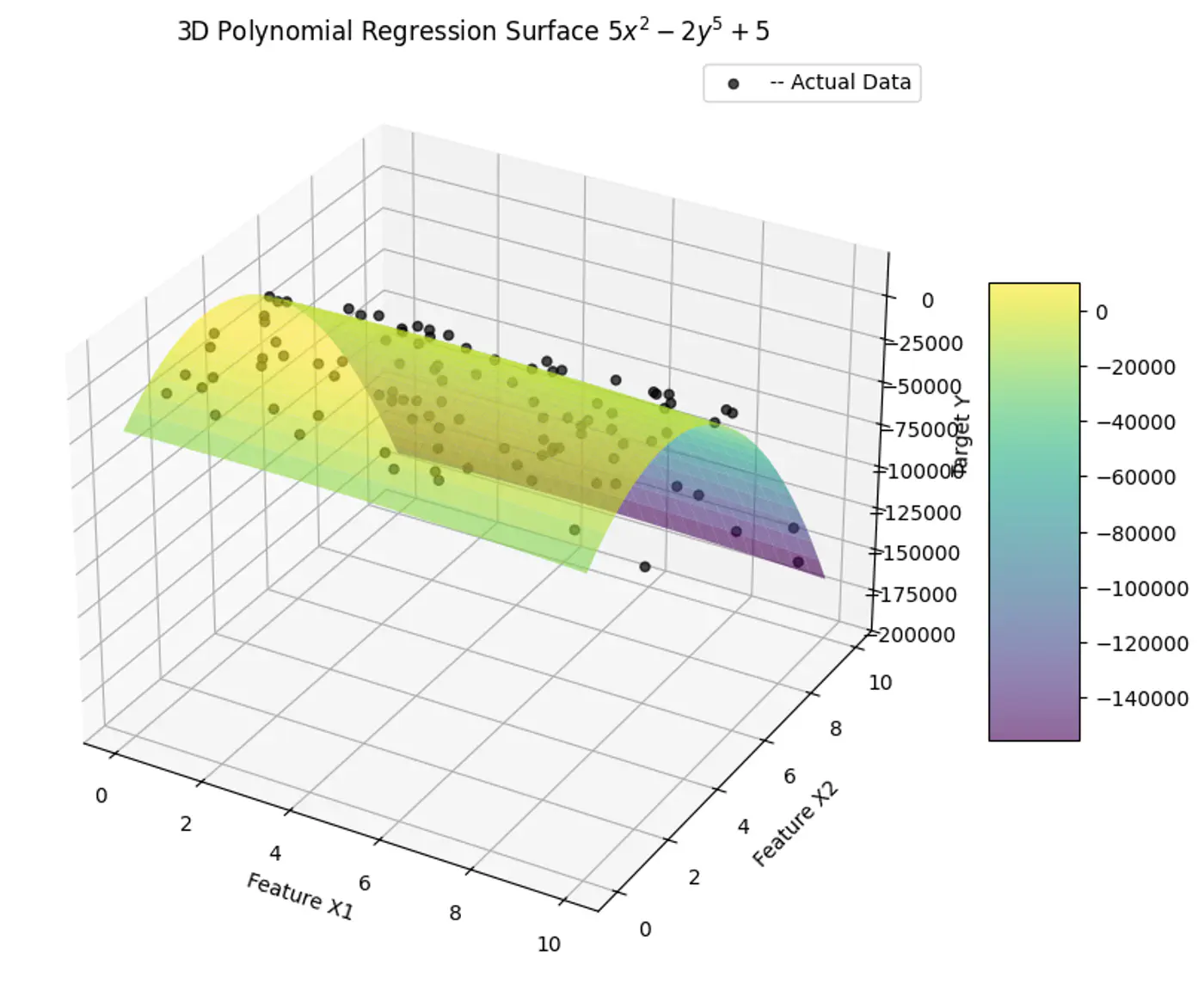
Polynomial 🐙 Features
Create polynomial features, such as, x^2, x^3, etc., to learn non-linear relationship.
Feature Crossing 🦓
⭐️ Combine 2 or more features to capture non-linear relationship.
- e.g. combine latitude and longitude into one location feature ‘lat-long'.
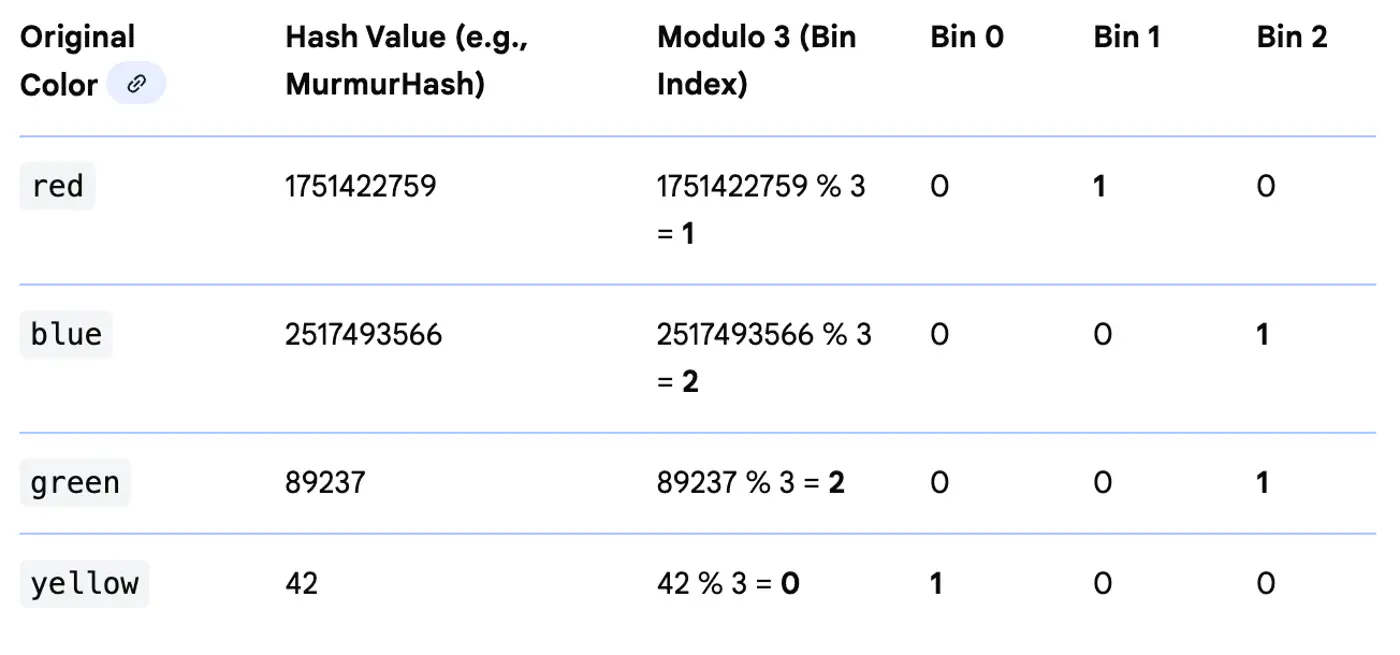
Hash 🌿 Encoding
⭐️ Memory-efficient 🧠 technique to convert categorical (string) data into a fixed-size numerical feature vector.
- Pros:
- Useful for high-cardinality features where we want to limit the dimensionality.
- Cons:
- Hash collisions.
- Reduced interpretability.
👉 Hash Encoding (Example)
Binning (Discretization)
⭐️ Group continuous numerical values into discrete categories or ‘bin’.
- e.g. divide age into groups 18-24, 25-35, 35-45, 45-55, >55 years etc.
End of Section